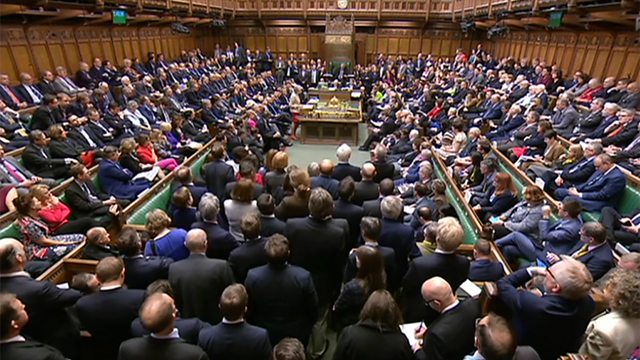
The Public Appointments Comprehensive Reform Act, a joint initiative of the Conservative Party and Liberal Democrats, failed to pass second reading in the House of Commons today. The vote was 302 in favour and 352 opposed. The Labour government was joined in opposition by the Scottish National Party, Plaid Cymru, the Ulster Unionist Party, and Social Democratic and Labour Party.
Early hopes inside the Conservative Central Office were that enough members of the Socialist Campaign Group would support the legislation that they would be able to prevail and pass it over the objections of Dr MacAndrews and her government. However, while some members of the Socialist Campaign Group did back the legislation, it was an insufficient number to change the outcome.
Parties generally favouring devolution opposed the legislation, which could have resulted in a Westminster-based body gaining more authority over devolved institutions. In particular, the Ulster Unionist Party opposed the legislations, despite a rumoured personal plea from the Leader of the Opposition, William Croft, to back it. "We view legislation that may transfer oversight powers from Stormont to Westminster, or prevent the future devolution of those powers, to be in violation of the Good Friday Agreement," said David Trimble, the UUP leader. Mr Trimble and John Hume, the SDLP Leader and MP for Foyle, agreed on a position in support of devolution in Northern Ireland ahead of the vote.
The failure of the legislation coincides with the creation of a Royal Commission on appointments reform, announced by Dr MacAndrews recently in Parliament. The commission is to be chaired by Lord Norton, a Conservative peer and professor at the University of Hull. Lord Norton previously chaired a commission advising former Conservative Leader William Hague on the constitution and now chairs the House of Lords Constitution Committee.
Said one political commentator, "Hopefully we can shelve this issue until the Royal Commission reports back. The public are increasingly looking at this debate and seeing politicians focused more on appointments than public services. Political advisors in party HQs across Westminster need to emphasize to the politicians just how little the public cares about this."